Inverted nipples (also called retracted nipples) point inward or lie flat against the breast instead of pointing outward. The change can be cosmetic, or it can affect breastfeeding. It happens in one breast or both, and is more common than most patients realise.
30 to 60 minutes
Local, sometimes general
5 to 7 days
Long-lasting, usually permanent
An inverted nipple points inward or lies flat against the breast, instead of pointing outward. It can occur in one or both breasts, and the depth of inversion varies from mild (the nipple can be pulled out easily) to severe (it cannot be pulled out at all).
For many women, the inversion has been present since adolescence. For others, it develops later in life. The most common causes are simply how the breast developed (congenital), ageing, previous breast or nipple surgery, and trauma to the area. Inverted nipples are usually a normal anatomical variation, not a medical problem on their own.
Inverted nipples are graded by how easily the nipple can be pulled outward. The grade matters because it decides whether non-surgical methods will work, and whether breastfeeding is possible.
Most facelift patients are between 40 and 65, though the right time is less about age and more about the changes you see in the mirror. Younger patients with early, mild ageing often do not need surgery yet, and Dr. Vasu will tell you honestly if that is the case.
The best candidates are in good general health, do not/avoid smoke, and have realistic expectations. A facelift turns the clock back. It does not stop it. What it gives you is a natural, refreshed look that ages gracefully from a younger starting point.

Patients seek inverted nipple correction for two very different reasons. Both are equally valid, and Dr. Vasu helps both audiences with the same care.
Women who have lived with inverted nipples for years and want them to point outward like the rest of their body. Common reasons include comfort in bras and swimwear, self-consciousness in intimate moments, or simply wanting the breasts to look the way they wish they did. There is no medical urgency. The decision is personal and deserves a private, respectful conversation.
Pregnant women preparing to breastfeed, or new mothers who are struggling because the baby cannot latch onto an inverted nipple. Grade 1 inversion is usually manageable with simple techniques. Grade 2 and 3 often need surgical correction to make breastfeeding possible. Ideally, surgery is done before pregnancy where possible, since the operation can affect the milk ducts in some techniques.
If breastfeeding is a future priority, please mention this at your consultation. Dr. Vasu uses a technique that preserves milk ducts wherever possible.
For Grade 1 inversion, non-surgical methods may work and are worth trying first. For Grade 2 and Grade 3, surgery is usually the only reliable option, but knowing what else exists is part of an honest conversation.

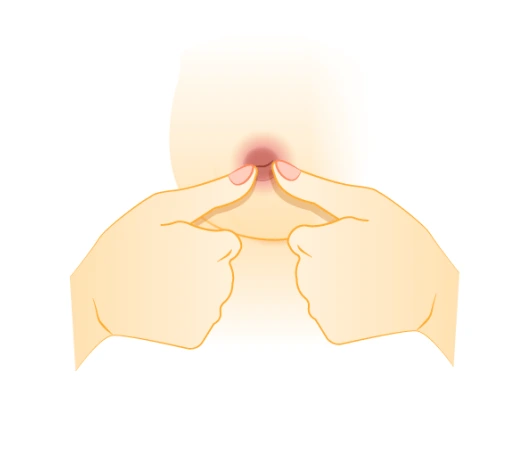
Hoffman technique. A simple manual exercise. With your thumbs on either side of the nipple base, press downward into the breast tissue and pull the thumbs apart, all around the nipple. Done daily, it can help mild inversion before breastfeeding. Effective for Grade 1 only.
Nipple eversion devices. A small syringe-like or suction-cup device that pulls the nipple out gently and holds it there. With consistent use over weeks, it can help loosen the tissue and keep the nipple out longer. Available over the counter and online. More effective for Grade 1 than Grade 2.
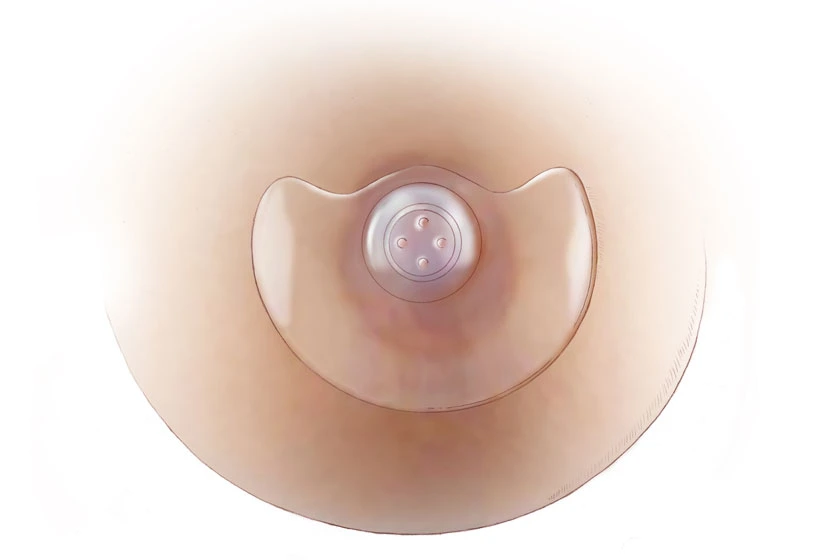
Nipple shields (for breastfeeding only). A thin silicone shield placed over the nipple during feeding to help the baby latch. Useful as a temporary aid for breastfeeding, not a correction of the inversion itself.
None of these methods permanently corrects Grade 2 or Grade 3 inversion. If non-surgical methods have not worked for you, or if your inversion is more severe, surgical correction is the next conversation.
Some changes are worth a quick check.
Most inverted nipples are simply an anatomical variation, present since adolescence, with no medical concern. They do not need to be treated unless you want them treated.
That said, a new change in nipple shape, particularly in adulthood and on one side only, is worth having checked by a doctor. A sudden change can occasionally signal an underlying breast condition that needs evaluation before any cosmetic procedure is considered. If your inversion has been there your whole life, this does not apply. If it is new, a quick check is the responsible first step.
Dr. Vasu can examine you, identify whether the inversion is congenital or new, and recommend the right next step honestly
Inverted nipple correction is a short, day care procedure. It can be done under local anaesthesia (you stay awake but feel nothing in the area) or under general anaesthesia if combined with another breast surgery.
If you are having the procedure alongside another breast surgery (augmentation, lift, or reduction), it is performed under general anaesthesia at the same time, with no additional recovery period beyond the main procedure.
Dr. Vasu examines you, assesses the grade of inversion, discusses whether breastfeeding is a priority, and recommends the right technique. You receive a clear written plan.
Local anaesthesia is used for most cases. General anaesthesia is used if you are also having another breast procedure at the same time.
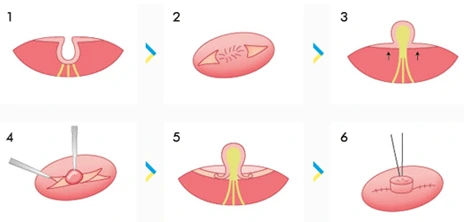
The inversion is corrected through small incisions at the base of the nipple. The nipple is stabilised in its new position with internal sutures.
Go home the same day. The nipples are covered with a comfortable surgical dressing. You receive prescribed medication and clear written aftercare instructions.


The nipples are covered with a comfortable surgical dressing that stays in place for the first few days, sometimes up to 2 weeks for severe inversion cases. Some bruising, swelling, and tenderness in the area are normal. Pain is mild and easily managed with prescribed medication. Avoid strenuous activity.


Most patients return to normal daily activities and desk work within a week, sometimes sooner depending on the level of correction. Avoid sexual activity and strenuous tasks (gym, lifting, swimming) for 7 to 10 days. Dissolvable sutures do not need to be removed, but a follow-up visit is needed to rule out infection.


The nipples gradually settle into their new shape. They may appear slightly swollen during the healing phase. Some tenderness and altered sensation in the area are normal and usually resolve over the following weeks.


The final shape is appreciable. Sensation continues to settle over the following months. The nipples look natural, point outward, and the result is usually permanent.

Inverted nipple correction is a short surgery, but the difference it makes is real and lasting. The technique selection, decision to preserve milk ducts, and care with scarring are the small choices that decide the result. These choices are best made by a qualified plastic surgeon who has performed the procedure many times across both audiences (cosmetic and breastfeeding).
A fully accredited tertiary care hospital with sterile theatres and proper anaesthesia support. Even a short day care surgery deserves a hospital setting
Performed personally by Dr. Vasu, with the same precision he brings to every surgical procedure. He uses a duct-preserving technique wherever breastfeeding is a future priority.
Dr. Rajesh Vasu has 30+ years of clinical experience and 5,000+ procedures performed. He is a member of ISAPS, internationally fellowship trained in aesthetic surgery.
Inverted nipple correction cost in Hyderabad depends mainly on whether the procedure is done alone under local anaesthesia, or as part of a larger breast surgery (augmentation, lift, reduction) under general anaesthesia. One side vs both sides is also a factor.
Dr. Vasu provides a full written treatment plan with the cost broken down before anything is scheduled. Surgeon, hospital, anaesthesia, follow-ups, all included. No hidden charges.
Real patients. Real repairs. All photographs published with written consent.
Patient 1 · Female, 34 3 months post
Patient 2 · Female, 34 3 months post
Patient 3 · Female, 34 3 months post
Individual results vary. Photographs are representative, not guaranteed outcomes. Consultation required to assess suitability.
Yes. Surgical correction is usually permanent, especially for Grade 2 and Grade 3 inversion. Non-surgical methods (Hoffman technique, eversion devices) can help Grade 1 inversion but rarely give a permanent result for more severe cases. Dr. Vasu confirms during consultation which option will give you a real, lasting result.
It depends on the technique used. Wherever breastfeeding is a future priority, Dr. Vasu uses a duct-preserving technique that releases the tight fibrous tissue without dividing the milk ducts themselves. For Grade 3 cases where significant tissue must be released, some impact on breastfeeding is possible. Please raise this at consultation so the right technique can be chosen for you.
Most patients describe mild tenderness and tightness rather than significant pain. Local anaesthesia means you feel nothing during the procedure itself. Soreness in the first few days is easily managed with prescribed medication. By the end of the first week most patients are off pain relief entirely.
30 to 60 minutes for both sides, performed as a day care procedure. You go home the same day. If you are having the correction alongside another breast surgery, the timing follows the larger procedure.
Most patients return to a desk job within a week, sometimes sooner. Strenuous tasks, gym, swimming, and sexual activity should be avoided for 7 to 10 days. Dr. Vasu gives you a clear timeline at consultation based on your case.
The incisions are small and placed at the base of the nipple, in natural skin creases. With proper scar care, the scars are usually barely visible. Scar reduction creams may be prescribed to help fading over the following months.
Most patients retain normal nipple sensation after the procedure. Some altered sensation in the early weeks is common and usually settles back to normal. Permanent change in sensation is uncommon when the surgery is performed by an experienced plastic surgeon.
Rarely. Some nipples can return to a partially inverted position, particularly in severe Grade 3 cases where the tissue tension is strong. Modern techniques with stabilising internal sutures keep recurrence rates very low. Dr. Vasu uses the technique most reliable for your grade.
As with any surgery, possible risks include infection, bleeding, altered sensation (usually temporary), partial loss of nipple tissue (very rare), and rarely recurrence of the inversion. These risks are minimised by performing the procedure with proper sterile technique in an accredited hospital setting.
Yes, and it often is. Many patients have inverted nipple correction performed at the same time as a breast augmentation, breast lift, or breast reduction. Combining procedures in one session shortens overall recovery and is performed under general anaesthesia.
If you have been living with inverted nipples and have been told nothing can be done, or you have tried non-surgical methods without success, or you are preparing for breastfeeding and worried it might not work, a 15 to 20 minute consultation with Dr. Vasu is the simplest place to start. He will tell you honestly which grade you have, whether surgery is the right step, and what your recovery would involve. The conversation is private, respectful, and unrushed.